You can be highly capable, responsible and successful at what you do — and still find that financial uncertainty occupies far more of your mind than you want it to.
Perhaps interest rates have risen.
Your mortgage or rent has become harder to manage.
An unexpected expense has arrived.
Your job feels less secure than it once did.
Or you simply have the uncomfortable feeling that the numbers aren’t adding up as comfortably as they used to.
The financial problem itself may be very real.
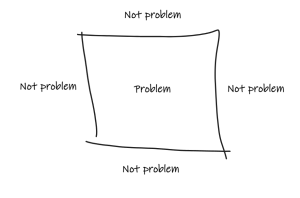
But there is often a second problem running alongside it: what your mind does with the uncertainty.
When something important feels threatened, your brain naturally starts trying to protect you.
You think ahead.
Run scenarios.
Look for dangers.
Try to work out what might happen next.
That can be useful — up to a point.
But financial uncertainty has an awkward characteristic: many of the things you’re worrying about may not have happened yet.
So the mind starts filling the gaps.
What if interest rates rise again?
What if I lose my job?
What if I can’t meet that payment?
What if things get much worse?
Soon, there may be a mixture of financial facts and frightening predictions, and emotionally they can begin to feel almost identical.
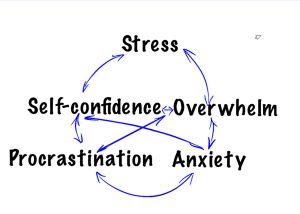
That’s when money worries can follow you into meetings, disturb your sleep, reduce concentration and make ordinary decisions feel harder than usual.
The answer isn’t to tell yourself that everything will be fine.
Sometimes there genuinely are financial issues that need attention.
A more useful first step is to separate three things:
What do I actually know?
What am I predicting?
What useful action can I take next?
You may not be able to solve the entire financial problem today.
But you may be able to make one phone call.
Check one figure.
Ask one question.
Make one decision.
Or recognise that, for today, you’ve done what you reasonably can.
Financial pressure becomes particularly exhausting when your brain feels it has to solve the entire future at once.
It doesn’t.
Sometimes the most useful thing you can do is calm the emotional alarm enough to see the situation clearly – and then deal with the next thing that actually needs dealing with.
#EngineeringLeadership #TechnicalLeadership #Engineers #Leadership #PeopleManagement